Skincare journal ·
Blackheads on the nose: why they come back after you clean them
Why blackheads on the nose return after cleansing, how to tell them apart from sebaceous filaments and which simple routine helps keep them under control.
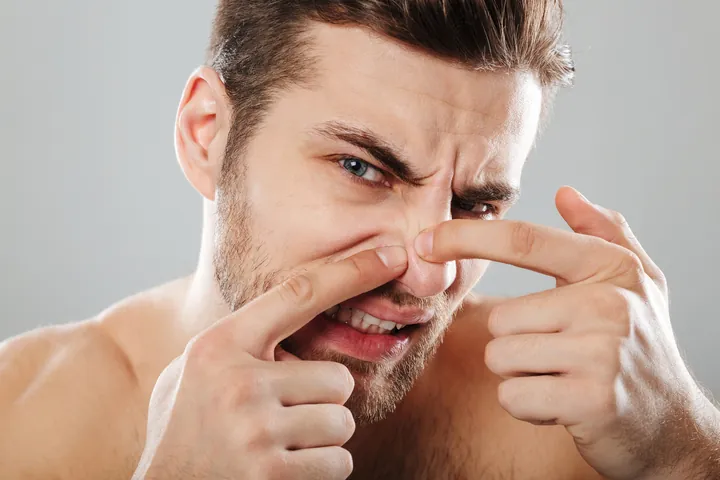
You cleaned your nose, the pores looked clearer, and a few days later the dark dots are back. That does not automatically mean your product is useless or that you need to scrub harder. Cleansing removes what has already built up, but your skin keeps making sebum, so new comedones can form. On top of that, some of what you see on the nose are sebaceous filaments, a normal part of the skin's structure.
The first useful step is to tell the two apart. That way you can pick suitable care and avoid repeated squeezing that leaves the nose red and sensitive.
Open comedone or sebaceous filament?
A blackhead (an open comedone) forms when sebum and dead cells block a pore. The part at the surface darkens when it meets the air, so the dark colour has nothing to do with dirt.
Sebaceous filaments do a different job: they carry sebum up to the skin's surface. They are normal and show mostly on the nose.
A rough way to tell them apart:
- comedones are usually darker and stand out individually;
- sebaceous filaments are usually small, flat, greyish or yellowish and spread fairly evenly;
- if you are unsure, a dermatology check will clarify what you are looking at.
Not every dot on the nose has to be removed. Chasing a nose with no visible pores at all can irritate skin that is actually healthy.
Why they return after cleansing
Sebaceous glands keep working and the skin keeps renewing its cells. Removing one plug changes none of that, so pores can clog again.
A few things make a comeback more likely:
- products that weigh the skin down;
- make-up that is not fully removed;
- a routine that only cleans the surface and does nothing to stop build-up inside the pores.
With sebaceous filaments, coming back is simply expected: you can make them less noticeable, not remove them permanently.
Pore size matters too. Once you know what to expect from caring for enlarged pores, the goal becomes a more even complexion, not skin without a single pore.
What can help with blackheads
Good care has two aims: reduce the blockages that already exist and limit new ones. The right ingredient also depends on how sensitive your skin is.
Salicylic acid for congested pores
Salicylic acid exfoliates and helps unclog pores, which is why it is used in comedone care. You will find it both in cleansers and in leave-on formulas.
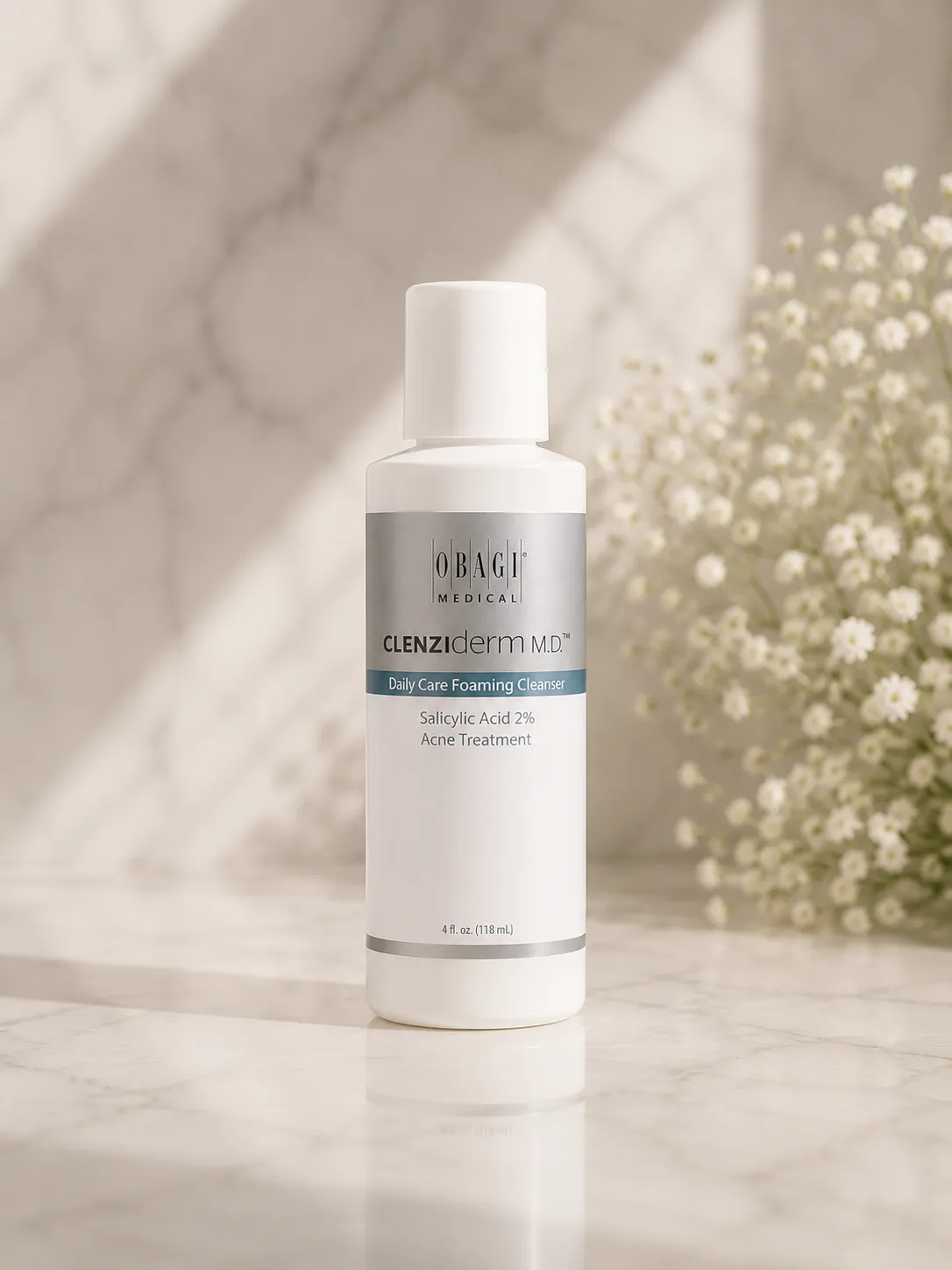
In our shop it is in, for example, the CLENZIderm M.D. Daily Care foaming cleanser from Obagi, which contains 2% salicylic acid. Apply it to damp skin, then rinse, keeping away from the eye area.
The formula also contains menthol. If your skin is sensitive or reacts easily to new products, check first how you tolerate it; a product made for acne-prone skin is not automatically right for you. If dryness or irritation appears, use it less often.
Retinoids for stubborn comedones
Topical retinoids used in acne treatment can help clear pores and prevent new lesions. Whether they suit you is for a dermatologist to decide.
Retinol in cosmetics is not the same thing as an acne medicine. Do not drop a treatment your doctor recommended in favour of a serum picked just because it contains vitamin A.
Introduced too quickly, a retinoid can irritate. If your skin starts to dry out and peel after retinol, do not increase the amount to see results sooner. Retinoids are avoided during pregnancy.
A simple routine at home
You do not need an exfoliant, a purifying mask and a strong serum every day. To start, a few steps you can keep up are enough:
- Gentle cleansing, without rubbing and without very hot water.
- A single active product, chosen for your skin type and used as directed.
- A moisturiser, even if your skin is oily.
- Sun protection in the morning, broad spectrum and SPF 30 or higher.
To keep the routine consistent, follow the order in which products are applied. Do not start several new products at once: if a reaction appears, you will not know what caused it.
With acne treatments, the first changes can show after 6–8 weeks. Compare your skin in the same light and at longer intervals, not after every wash.
When extraction makes sense
Extraction can help with certain comedones that stay despite treatment. A dermatologist decides whether it is needed and does it with sterile instruments.
Extraction does not replace daily care. It removes the current lesion but does not stop a new one from forming.
At home, do not press with your nails or use metal tools: squeezing can lead to inflammation, infection or scarring. Nose strips can lift some of the material at the surface for a while, but they do not prevent it from coming back.
If the area becomes painful, swells or starts to discharge, stop touching it and get a medical check.
Good to know
- Blackheads are not a sign of poor hygiene, and washing over and over does not change how they form.
- Sebaceous filaments have a normal role: they help spread sebum.
- A product that stings a lot is not more effective because of it.
- How your nose looks right after extraction says nothing about how well you are preventing new comedones.
FAQ
Can I get rid of blackheads on my nose for good?
You can keep them under control and reduce new ones, but there is no way to be sure they will not come back. Sebaceous filaments stay, because they are part of the skin.
Do I need to exfoliate my nose every day?
Not necessarily. How often depends on the product, the rest of your routine and how your skin responds. Too much exfoliation can irritate.
Can I use salicylic acid and retinol on the same evening?
The combination can irritate, especially in the first weeks. Introduce them one at a time and ask your doctor if you are already following a dermatological treatment.
When should I see a dermatologist?
When comedones do not improve despite a consistent routine, when painful spots appear, or when marks and scars are left behind. A correct diagnosis helps choose the treatment.
In closing
Start from what you actually see on your nose; only then build a short routine and give it time to work. Gentle cleansing, one suitable active and moisturising are easier to keep up in the long run. For a product recommendation you can write to us and we will suggest cosmetic options; inflamed lesions or ones that do not go away need a dermatologist's assessment.