Skincare journal ·
Skin peeling after retinol: what to do
Why peeling happens after retinol, what to change in your routine while your skin is irritated and how to bring retinol back gradually without sensitising your skin.
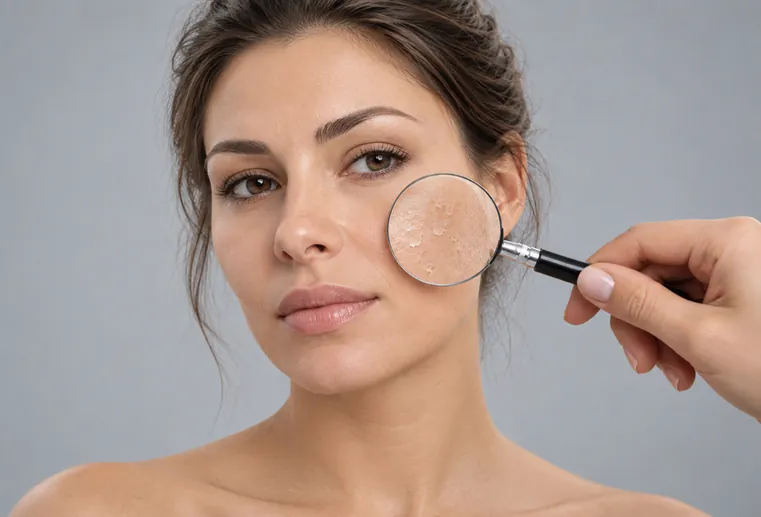
Fine flakes, dry skin that feels tight, more sensitivity than usual: these reactions often show up when retinol enters a routine too fast or when the skin has not yet adjusted to it.
Peeling is not a sign that the product is “working better”. Retinol does not need to irritate your skin strongly to have an effect. What matters is the concentration, how often you apply it and, above all, how your skin tolerates it.
Why peeling happens
Retinol is a vitamin A derivative, often used to improve skin texture and the look of fine lines, marks and blemishes. At first, the skin needs time to adapt.
Peeling is more likely when:
- you start straight away with a high concentration;
- you apply it every night from day one;
- you use too much product;
- you spread it on skin that is still damp;
- you combine it with other actives that can irritate;
- your skin barrier is already sensitised.
Often the problem is not retinol itself but the overly fast pace at which you introduced it.
Does peeling show that retinol is working?
Not necessarily. Some mild dryness can appear during the adjustment period, but heavy peeling, redness that does not go away, stinging or a burning feeling are signals to take seriously.
If your face stings even when you apply a basic moisturiser, your skin barrier may be compromised and your routine should be cut back to the minimum.
If you use several actives, note that niacinamide and retinol are well tolerated by many skin types, provided you introduce them gradually.
What to do when your skin starts peeling
The temptation is to exfoliate to get rid of the flakes. You need the opposite: fewer actives and more moisture. For a few days:
- apply retinol less often;
- if your skin stings, take a break from it;
- cleanse your face with a gentle product;
- use a simple moisturiser;
- skip scrubs and peels;
- do not pull off the flakes;
- apply sun protection every morning.
When skin is already sensitised, a routine designed for dry and dehydrated skin can help it regain comfort before you go back to retinol.
How to return to retinol without irritation
Once the redness, stinging and peeling have eased, you can restart retinol gradually. Especially at the beginning:
- apply it once or twice a week;
- use a small amount for the whole face;
- put it on clean, completely dry skin;
- if your skin is sensitive, add a moisturiser;
- increase frequency only if your skin tolerates it well.
For some people the “sandwich” technique also works: a layer of moisturiser, then retinol, then another thin layer of cream.
It is not a race to daily use; the aim is to find the frequency that suits your skin.
What to avoid while your skin is irritated
Peeling skin cannot handle a routine full of actives. For a while, reduce or stop:
- other retinoids;
- AHA and BHA acids, including glycolic acid;
- abrasive scrubs;
- chemical peels;
- any product that stings right after you apply it.
You can bring them back later, depending on how your skin tolerates them. A routine can be effective without using every active on the same evening.
How to choose a suitable retinol
Do not automatically reach for the highest concentration. The right product is one you can use consistently without your skin being constantly irritated. Consider:
- the experience you already have with retinoids;
- how sensitive your skin is;
- the product's concentration;
- the other ingredients in the formula;
- how often you will use it.
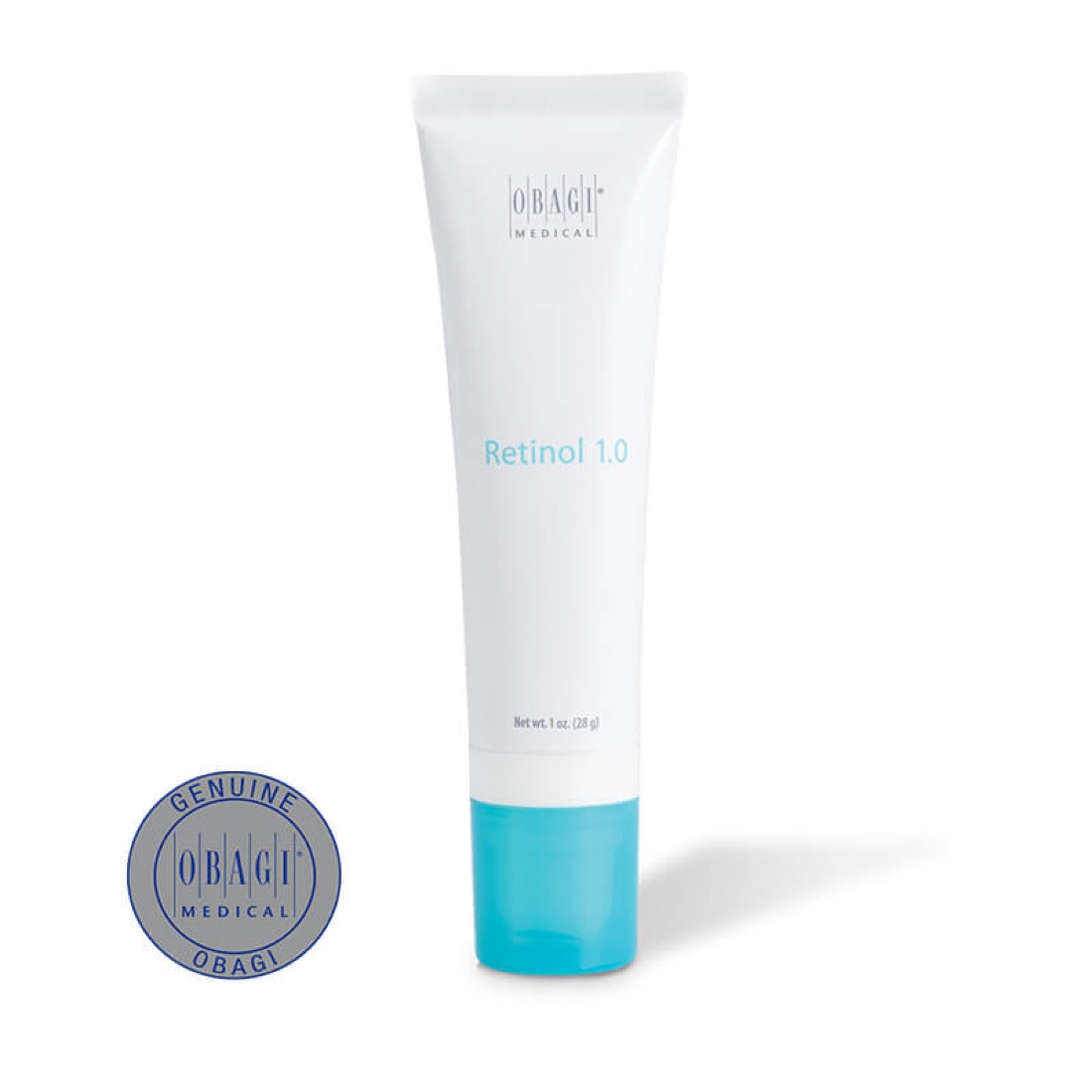
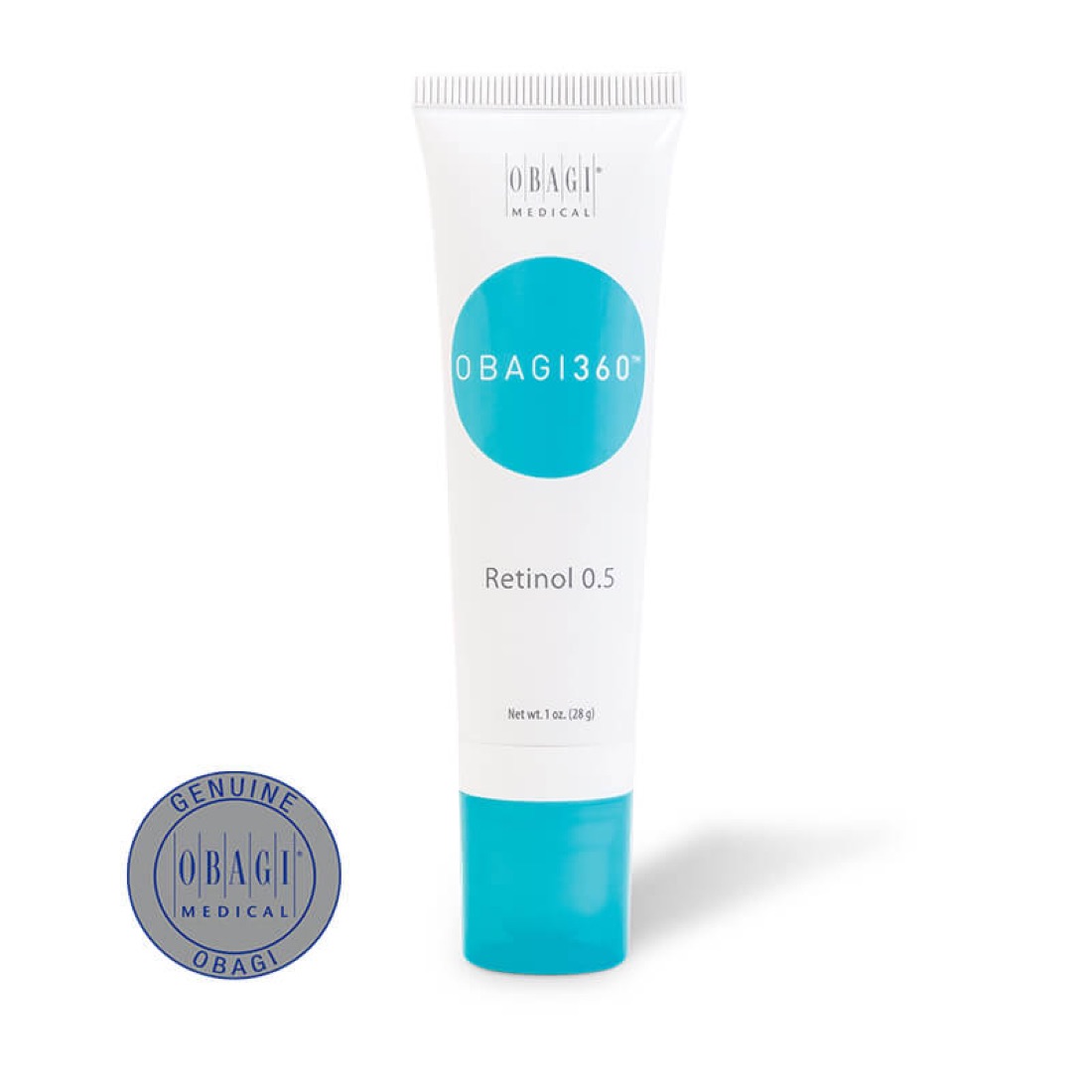
In our shop you will find retinol products from the Obagi range. The percentage on the pack is not the only criterion: choose the formula for what your skin really needs.
When you buy retinol online, always check the concentration, how to apply it and the full ingredient list; a reliable shop makes this information available so you can choose properly.
SPF remains a must
When you use retinoids, sun protection is a step you do not skip. In the morning apply a broad-spectrum cream, ideally SPF 30 or higher, and reapply it when you spend a long time outdoors.
UV radiation is present in the cold season too, which is why an SPF cream belongs in your daily routine all year round. It matters even more when the goal of retinol is fading marks, smoothing texture or signs of photoageing.
Good to know
- Retinol is derived from vitamin A.
- Retinol can work without any flaking.
- A higher concentration does not automatically bring better results.
- Too much product raises the risk of irritation.
- Sensitive skin often does better with infrequent applications, increased gradually.
- In a retinol routine, moisturising and SPF are important.
- Results come from consistency, not excess.
FAQ
How long does peeling after retinol last?
It varies with the product's concentration, the frequency of application and how sensitive your skin is. If the reaction is mild, it usually calms down once you apply retinol less often. If it does not go away or gets worse, take a break.
Can I put moisturiser over retinol?
Yes. Cream can reduce the feeling of dryness and helps your skin cope better with the routine.
Does retinol work on sensitive skin?
Often, yes; the cautious option is a gentle formula, used only occasionally at first.
Is stinging after retinol normal?
Slight sensitivity can occur. Strong burning, marked redness or pain, however, are not reactions you should put up with.
Should I give up retinol if my skin peels?
Not necessarily. Sometimes it is enough to apply it less often and restart once your skin has recovered.
In closing
If your skin is peeling after retinol, do not rush things with more frequent applications: more product does not mean faster results. Simplify your routine, moisturise, use SPF and restart retinol gradually, choosing the formula according to your skin's sensitivity, the concentration and your experience with retinoids. If strong redness, pain, inflammation or irritation that does not settle appear, see a dermatologist before continuing with the product.