Skincare journal ·
Arbutin for dark spots: how it works and how to use it
What arbutin does to pigment, which kinds of dark spots it may help with, and how to fit it into your routine alongside daily sun protection.
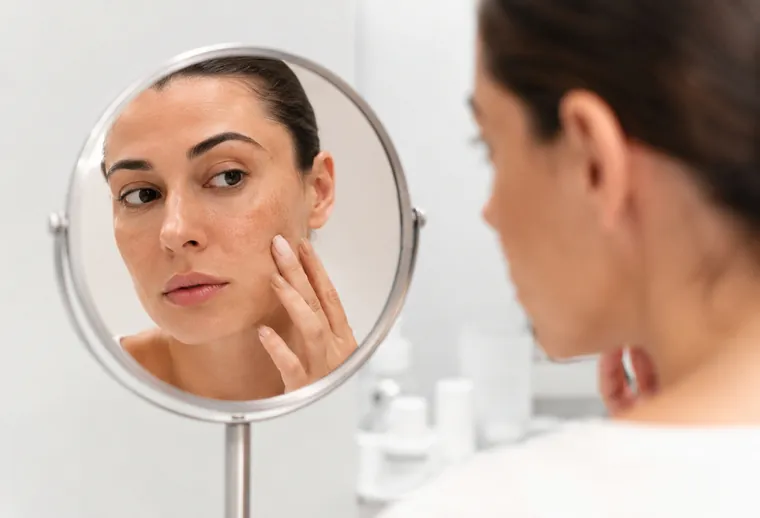
If you are looking for a product for the marks left by breakouts or for an uneven skin tone, you will often come across arbutin. You may already have tried covering the spots with make-up or switched between a few creams without seeing any difference.
Arbutin lowers the amount of melanin your skin produces. Melanin is the pigment that gives skin its colour, so the ingredient can help hyperpigmented areas fade. How much depends on what caused the spots, on the formula you choose and on how consistently you use sun protection.
How arbutin works
The ingredient is used in cosmetics to even out skin tone. It targets tyrosinase, the enzyme the skin needs to form melanin. Put simply, it slows down the production of extra pigment.
It is not an exfoliant: it does not remove the surface layer on the spot, which is why changes show over time rather than overnight.
On labels you may see it as Arbutin or Alpha-Arbutin. The two forms are related, but two products that contain them are not necessarily the same. Concentration, stability and the rest of the formula all matter; a high percentage does not automatically make a product a better choice.
Which spots may respond to arbutin
Ingredients that reduce pigment can be useful in some forms of hyperpigmentation, but facial spots do not all have the same origin.
Brown marks after breakouts
Sometimes, once a spot has healed and the skin is smooth again, a brown mark remains. This is called post-inflammatory hyperpigmentation. Arbutin can help the pigment fade, but it does not correct depressed scars and does not treat active acne. That is why marks left by breakouts fade at different speeds.
Sun spots and melasma
Spots linked to sun exposure may look better with products designed to even out skin tone. Melasma is more complicated, and a single ingredient may not be enough. Before buying a cream, find out how to tell melasma apart from sun spots.
A spot that has appeared recently, changes shape, bleeds or looks different from the others should be seen by a dermatologist before you use any depigmenting product.
How to add it to your routine
Follow the product instructions first. A simple serum and a cream that also contains retinol are not used the same way.
- Patch test a small area. Check for redness, itching or stinging before applying it to your whole face.
- One new product at a time. That way you know exactly what suits you and what bothers your skin.
- Order matters. A fluid serum usually goes after cleansing and before cream; for creamy textures, read the packaging.
- Do not skip moisturiser and SPF. Your skin should stay comfortable throughout your dark-spot care.
Arbutin is found in both day and night products. When to apply it depends on the whole formula, not just on this ingredient.
Arbutin products in our shop
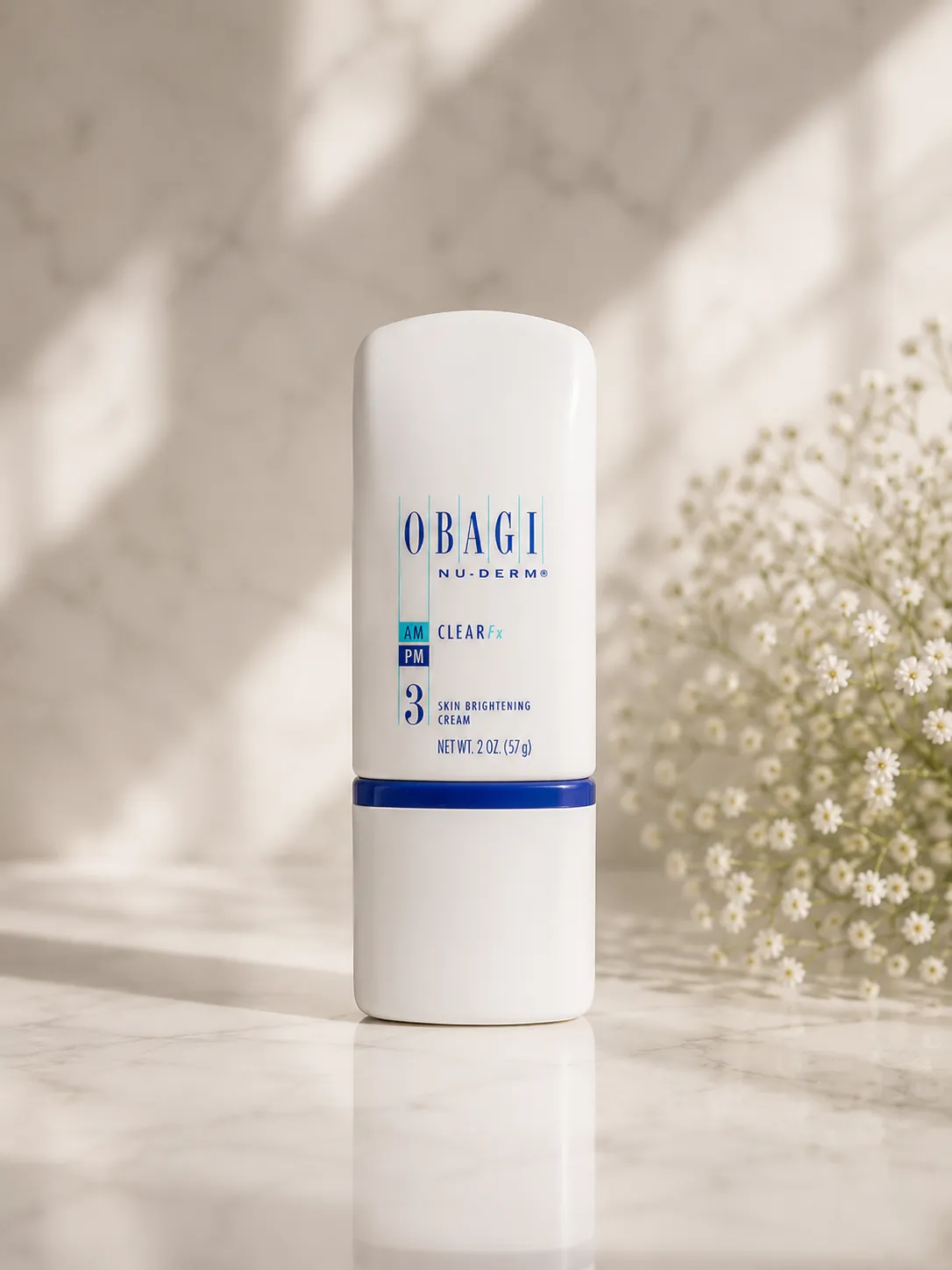
Nu-Derm Clear Fx is a cream with arbutin and antioxidants, designed for radiance and an even tone. Choose it according to your skin's needs and the other products in your routine.
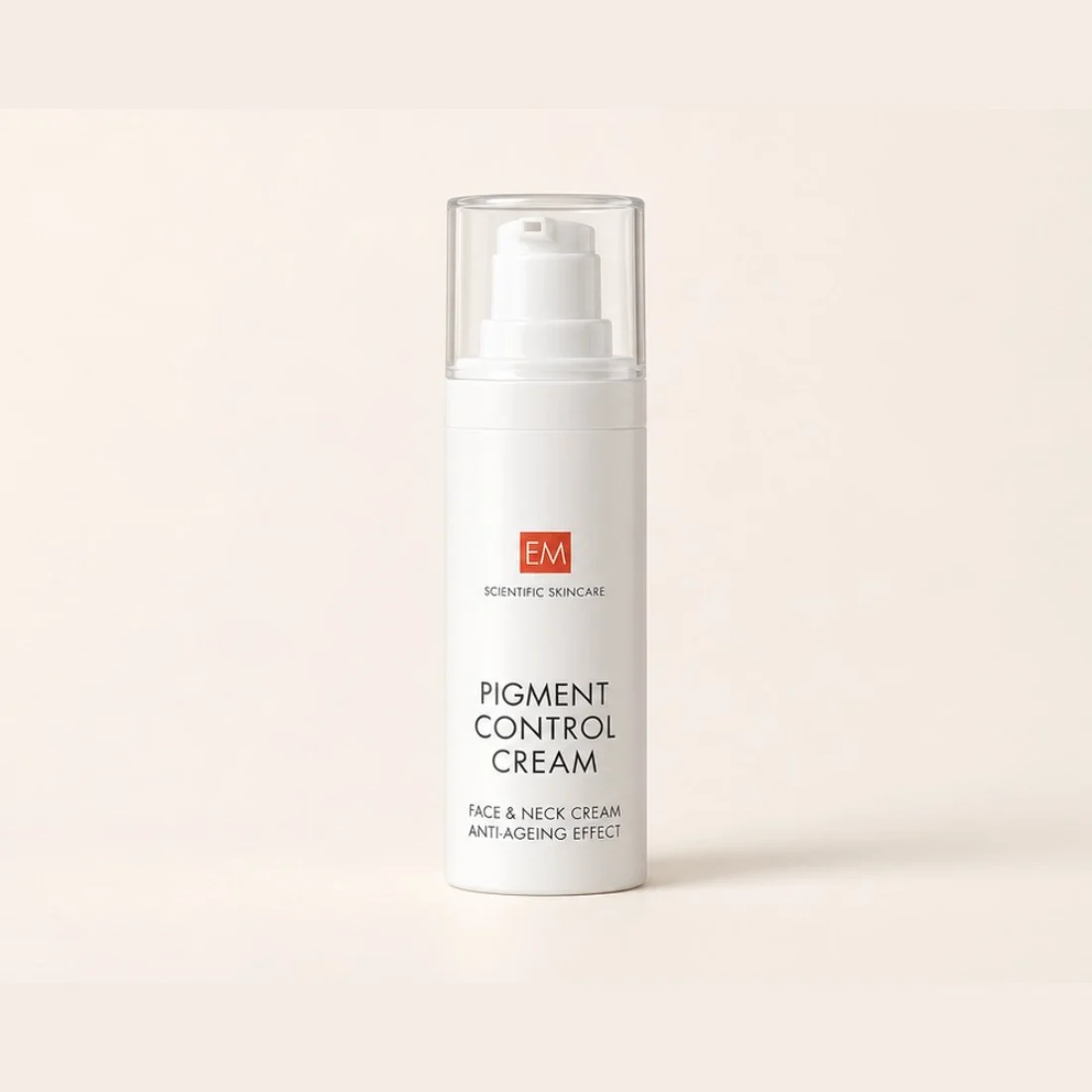
Pigment Control Cream from the EM Skincare range combines arbutin with retinol. Its instructions say to apply it in the evening, on clean and completely dry skin, starting with two or three evenings a week.
As a retinol cream, it comes with retinol's precautions: no other retinoids unless recommended, and alternate it with strong exfoliants. It is not recommended during pregnancy or breastfeeding.
These are two separate options; there is no need to use them together hoping for a faster effect.
Arbutin alongside vitamin C, niacinamide or retinol
Many formulas for uneven skin tone combine arbutin with other ingredients. Whether your routine works well together, however, depends on the concentrations and on how your skin reacts.
- Niacinamide complements care for an even tone and supports the skin barrier.
- Vitamin C has an antioxidant role, but some acidic formulas can sting on sensitive skin.
- Retinol can be paired with arbutin in a product designed that way, introduced gradually. If you already use a retinol cream, do not add another serum with the same active.
If stinging does not go away, or you notice redness or marked peeling, stop applying it and see a specialist, because irritation can maintain or even deepen pigmentation.
When to expect results
Fading dark spots takes weeks or months of consistent use. There is no timeframe that applies to every formula and every type of pigmentation.
Research on arbutin products has tested different formulas over different periods, and many contain several actives, so the effect cannot be attributed to arbutin alone.
To track progress, take photos at regular intervals, in the same light and without filters. If the spots stay the same or get darker, a dermatologist can tell you what needs to change.
Sun protection is part of the care
The sun can darken spots and make them come back. Apply a product with UVA/UVB protection of at least SPF 30 every day, following the instructions, and reapply roughly every two hours when you are outdoors, as well as after swimming or sweating.
With melasma, a tinted sunscreen with iron oxides gives extra help against visible light. A hat and staying in the shade round out your protection.
Good to know
- Red marks left by breakouts are different from brown spots. An ingredient that acts on melanin does not automatically reduce redness.
- Stinging does not show that a product is working.
- Melasma can return, even after a period in which your skin looked better.
FAQ
Are arbutin products applied only to the spots?
It depends on the formula: some go only on the areas with spots, others on the whole face. Read the instructions and avoid the eye area unless the product is made for it.
Is it suitable for sensitive skin?
That depends on the full formula. Patch test a small area and introduce the product gradually, without other new actives during the same period.
Will the spots disappear for good?
That cannot be promised. Keeping the result depends on the cause of the pigmentation and on how much sun you get.
A routine you can stick to
One well-chosen product, moisturiser and daily SPF are easier to keep up than a routine you overhaul completely. If you are not sure which formula suits you, the Martin Clinic team can help you choose, and for spots that do not fade, a dermatologist can establish the cause.