Skincare journal ·
Marks after breakouts: do they fade on their own, and how long does it take?
The difference between the marks, redness and scars acne leaves behind, how long they take to fade and what helps: sun protection, suitable ingredients and patience.

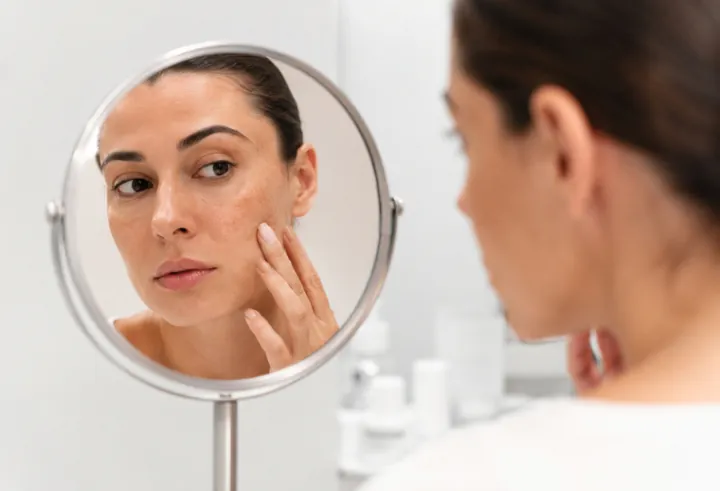
The spot has healed, it no longer hurts and the skin is smooth, but you can still see a reddish or brownish mark in the mirror. You wonder whether it will go away on its own or whether you need a specific product.
Many of the marks left by acne fade with time, at a pace that depends on the type of mark, how deep the pigment sits and how you care for your skin. Depressed or raised scars are a different story: they usually do not go away with a cream alone.
Mark or scar?
Acne "marks" can be different things. First check whether only the colour of the skin has changed, or the texture as well.
- Brown marks form when melanin is deposited after inflammation. They are called post-inflammatory hyperpigmentation and tend to last longer on darker skin tones.
- Pink, red or purple marks may be post-inflammatory erythema, linked to changes in the small blood vessels where the lesion healed.
- Scars change the surface: small pits, wider depressions or raised areas. Sometimes the same spot has both a scar and a change in colour.
Why it matters: a product for pigment does not necessarily reduce redness and does not fill in a deep scar.
How long until they fade
There is no timeframe that applies to everyone. It depends on how strong the inflammation was, whether new spots are still appearing, how much time you spend in the sun and how harsh your skincare is.
- Superficial marks, only slightly darker than your skin: they can fade naturally in about 6–12 months once the cause is under control. Deeper pigment can remain for years. These timeframes are a rough guide.
- Remaining redness decreases gradually, over a few months or longer.
- Textured scars can soften, but they often need treatment from a dermatologist.
If an old mark starts to fade but new spots appear next to it, your skin may look the same. So keeping active acne under control also helps prevent further marks.
What you can use
Start from the type of marks and your skin's tolerance. There is no need to begin retinol, a depigmenting serum and several exfoliants all at once.
SPF every morning
Ultraviolet light can darken pigment and slows down the evening-out of your skin tone. Apply a broad-spectrum product of at least SPF 30 every day, as directed, and reapply it about every two hours when you are outdoors, as well as after sweating or swimming.
Choose a texture you like from our sun protection products; that way it is easier to use every day. For hyperpigmentation, especially on darker skin, tinted creams with iron oxides also protect against visible light.
Ingredients for an even tone
Azelaic acid can be useful both for acne and for the pigmented marks the lesions leave behind. Retinoids, as well as vitamin C, can also play a role for uneven skin tone. The formula should be chosen according to how sensitive your skin is and the treatments you already use.
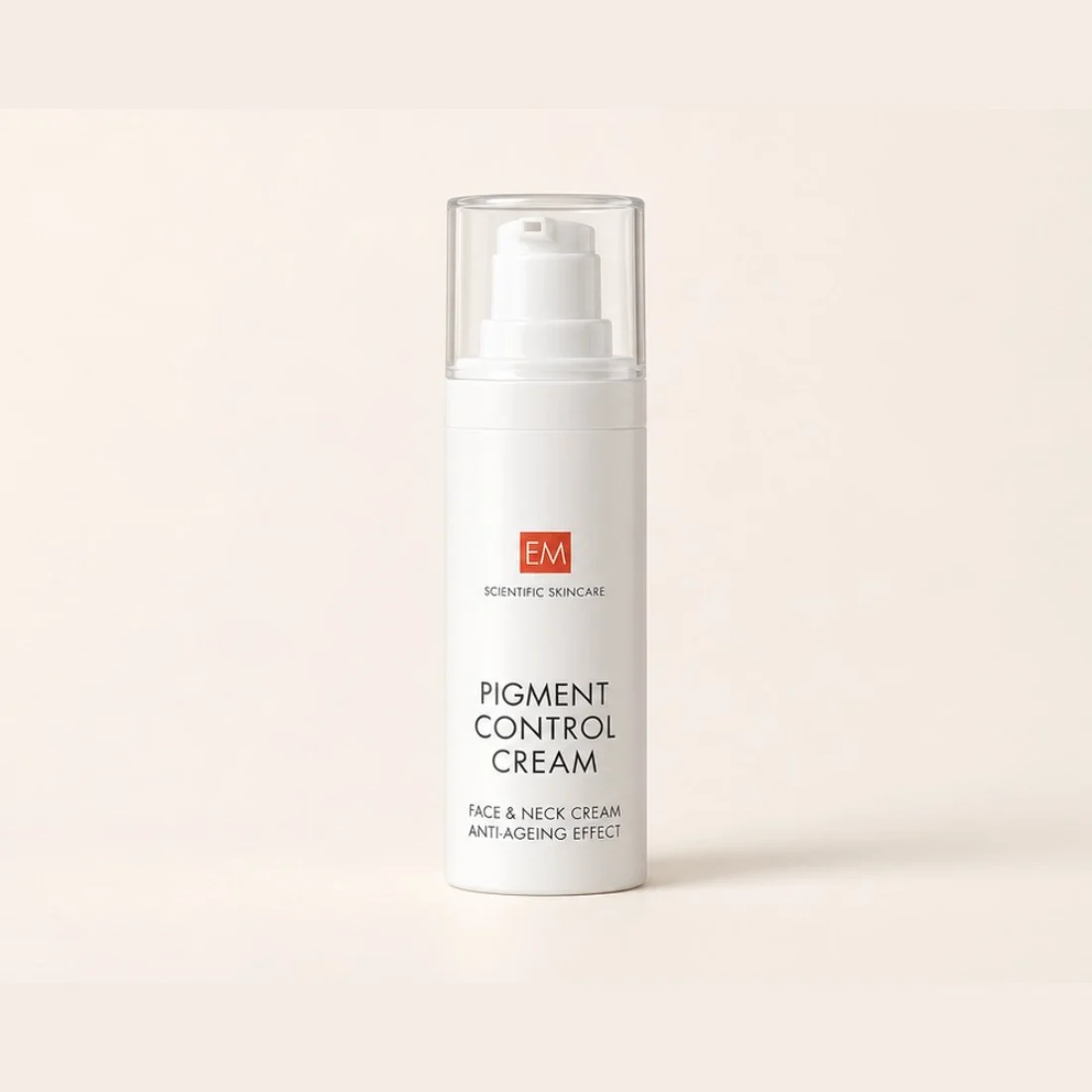
Pigment Control Cream from the EM Skincare range, with retinol and arbutin, is also aimed at skin with marks left after acne; the formula also contains niacinamide and other ingredients for an even look.
Its instructions: apply in the evening, on clean and completely dry skin, starting with 2–3 evenings a week, depending on how you tolerate it. It is not recommended during pregnancy and breastfeeding and is not combined with other retinoids except on a specialist's advice.
A cosmetic for dark marks does not replace acne treatment and cannot promise that marks will disappear within a set time.
Hydration and actives introduced gradually
If your skin keeps stinging, turning red or peeling, review your routine: irritation can keep marks going instead of speeding up fading.
Niacinamide and retinol can be used together, with attention to concentrations and the full formula. If a product already contains both, you do not need a separate serum.
A simple routine for acne marks
- Morning: gentle cleansing, moisturiser if you need it, sun protection.
- Evening: cleansing, your chosen product applied as directed, then a suitable moisturiser.
For the order of steps, see the order in which skincare products are applied, but the directions for the treatment you use come first.
Add new products one at a time. Regular photos, in the same light and without filters, show your progress better than the everyday mirror.
What makes marks last longer
Squeezing spots, picking scabs and repeated rubbing keep inflammation active for longer and make marks or scars more likely. Do not use lemon, baking soda or strong peels at home.
See a dermatologist if you have painful nodules, depressions, raised scars or marks that do not improve. For texture, a doctor can suggest procedures suited to the type of scar, after assessing any active acne.
Good to know
- A flat mark is not a scar, even if it stays visible for a long time.
- Marks can appear even if you have not squeezed your spots, simply because of inflammation.
- Exfoliating more often does not necessarily speed up fading.
- You can have pigment marks, redness and scars at the same time.
FAQ
Do marks after breakouts fade without treatment?
Many fade on their own once the inflammation is gone. SPF and avoiding irritation help the process.
Does retinol also help with red marks?
It is used mainly for acne, pigmentation and some texture concerns. Post-inflammatory redness arises through a different mechanism and may need a different approach.
Does a depigmenting cream remove scars?
It can improve colour, but as a rule it does not correct deep pits or raised scars.
If a product stings, does that mean it is working?
No. Stinging that does not go away is a signal to stop the product and review your routine, especially if redness appears as well.
Patience and the right care
Start with SPF, gentle cleansing and a single product chosen for your type of marks. If you would like details about the ingredients and use of the products in our shop, write to us. You do not have to change everything at once: a few well-chosen steps are easier to keep up.