Skincare journal ·
Melasma or sun spots? How to tell them apart
How melasma differs from sun spots in appearance, location and course, why diagnosis comes before treatment, and the role sun protection plays.

A darker area on your cheek may be melasma, but it could just as well be a spot left by years of sun. You buy a cream for an even skin tone without knowing exactly what you are treating, and when the pigment comes back, the obvious question arises: did you choose the right care?
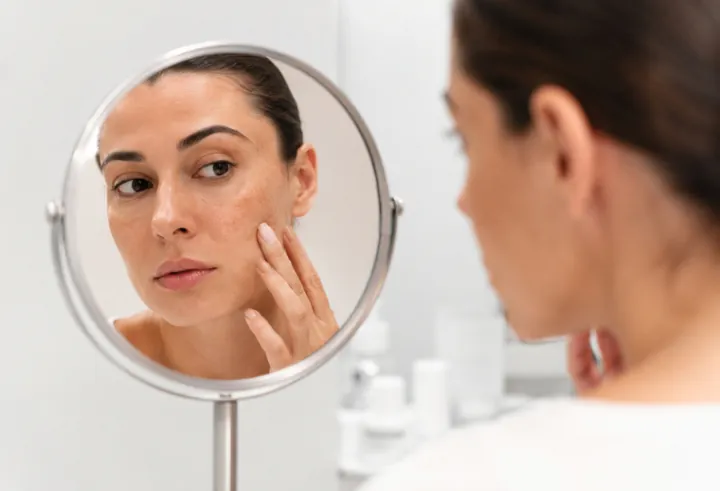
The most useful clue is how the spots are spread across the face. Melasma usually appears as pigmented patches on both halves of the face, whereas sun spots are separate marks with clearer edges. Their appearance can guide you, but the diagnosis is made by a dermatologist.
Melasma: what it looks like and where it appears
In melasma, the skin produces and stores too much melanin. The result is brown, sometimes greyish patches, especially on the cheeks, forehead, nose and upper lip.
The patches are often almost symmetrical: both cheeks pigmented, or a larger area on the forehead. The edges may be irregular, and the patches seem to merge.
Sun, genetics and hormones all contribute to it. It can start during pregnancy or while taking hormonal contraceptives, but it does not occur only in pregnant women and can also affect men.
Sun spots (solar lentigines)
These are pigment spots that appear after ultraviolet exposure accumulated over time. You find them on frequently exposed areas: the face, the backs of the hands, the forearms and the décolleté.
They are usually separate spots, round, oval or irregular in shape, with a fairly clear outline and colours ranging from beige to dark brown.
Freckles can fade a lot in winter; lentigines, on the other hand, stay all year. A spot you notice after a holiday may be the result of several years of sun, not just last summer.
The differences at a glance
- Appearance: melasma — patches that can join together; sun spots — separate, well-defined marks.
- Distribution: melasma — often on both sides of the face; sun spots — on exposed areas, not necessarily symmetrical.
- Where they appear: melasma — cheeks, forehead, above the lip; sun spots — face, hands, forearms, décolleté.
- Factors: melasma — sun, genetics, hormones; sun spots — UV exposure accumulated over time.
- Course: melasma — can fluctuate and return; sun spots — tend to stay.
These are pointers, not criteria for diagnosing yourself, and one person can have both.
A spot's history matters too: if it appeared exactly where a breakout or irritation used to be, it may be post-inflammatory hyperpigmentation. Marks left after breakouts form differently, even if they have a similar shade.
Why diagnosis comes before treatment
If you choose a cream only by the shade of the spot, you risk treating something other than the real problem. A dermatologist looks at the distribution, history and appearance of the lesions, using a dermatoscope and sometimes a Wood's lamp.
Any spot that grows, changes shape or colour, bleeds or looks different from the others should be checked before you use a depigmenting product. Not every brown lesion is purely a cosmetic concern.
Before your appointment, write down when the spots appeared, the products in your routine and whether they might be linked to a pregnancy, a medication or sun exposure.
How melasma is treated
Searching for "melasma treatment" brings up very different advice. Treatment is decided individually and aims both to fade the pigment and to maintain the result.
Depending on the case, a doctor may recommend azelaic acid, hydroquinone or combinations of medicines. Creams with hydroquinone, tretinoin or corticosteroids are not used according to schedules made up at home.
The same goes for procedures: peels and some lasers can help in carefully selected cases, but they can also deepen pigmentation. What works for a solar lentigo does not automatically apply to melasma.
Patience is needed: the American Academy of Dermatology often mentions 3–12 months before treatment shows a response, sometimes longer.
Products for a more even skin tone
Our shop includes formulas for uneven skin tone. Choosing them should take into account the diagnosis, how sensitive your skin is and any treatments you are already following.
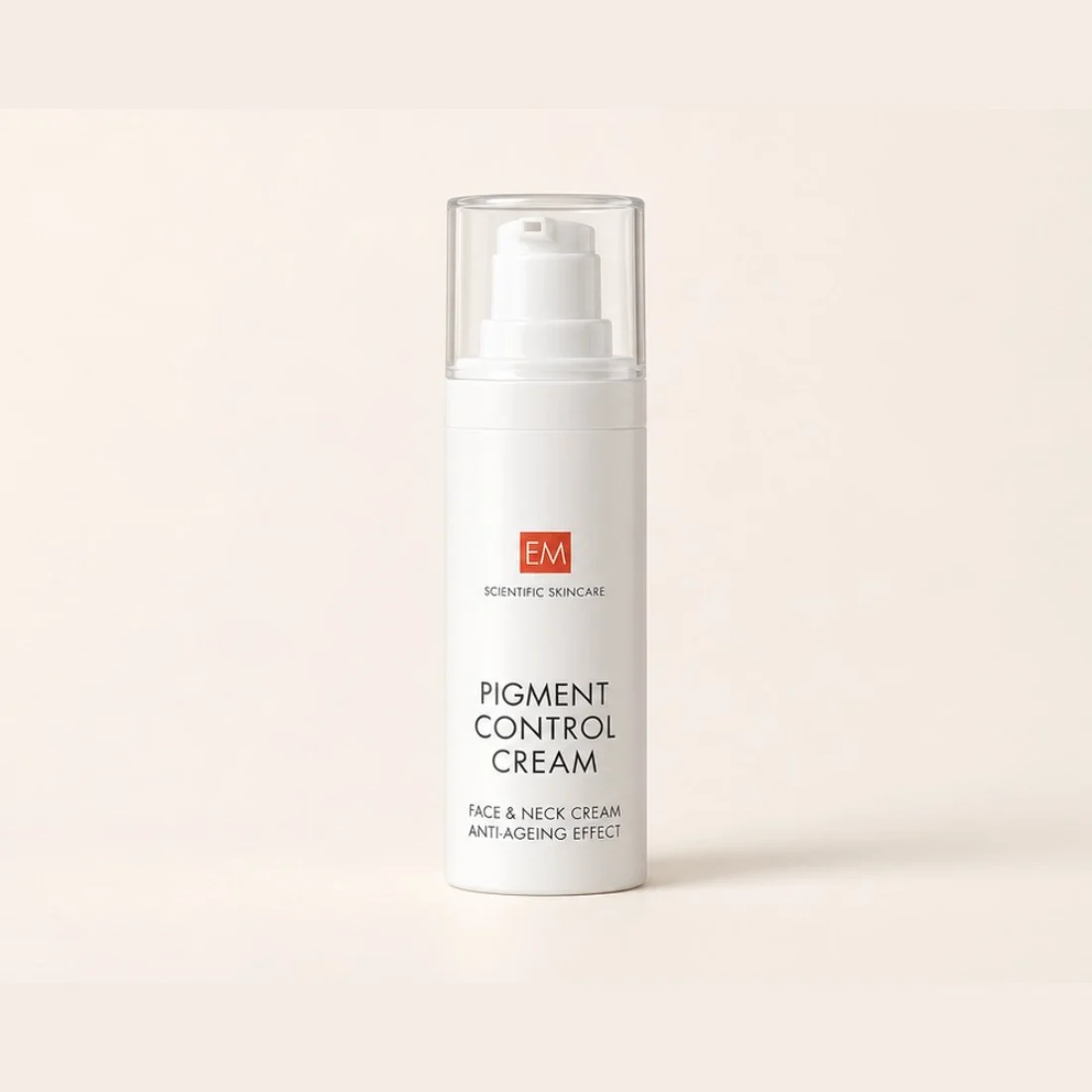
Pigment Control Cream, with retinol and arbutin, is used in the evening on hyperpigmented skin and introduced gradually, as directed, without combining it at random with other retinoids or strong exfoliants. It is not used during pregnancy or breastfeeding.
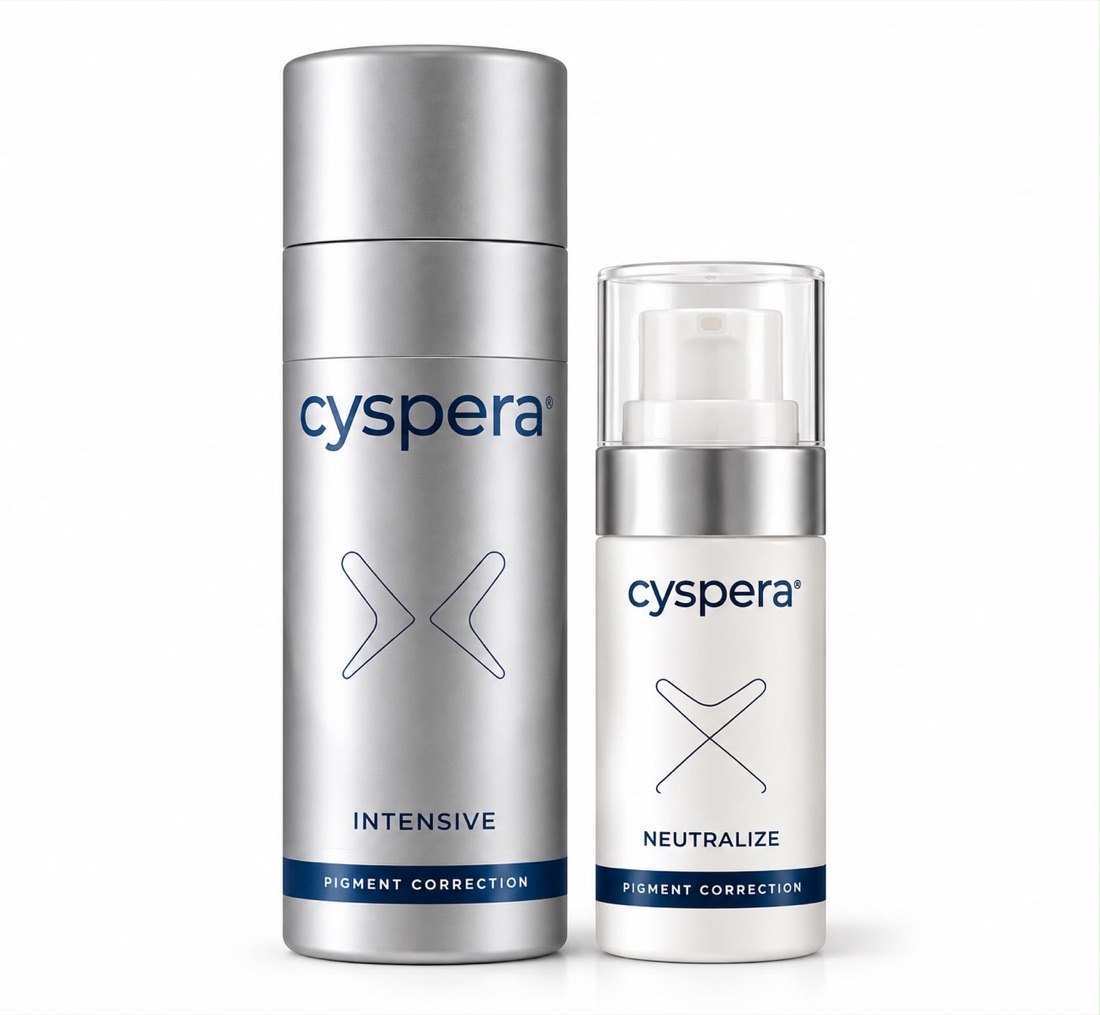
Another option is the Cyspera Intensive + Neutralize kit: a formula with cysteamine, followed by a step that removes it and helps keep the skin comfortable.
These are separate options to discuss when building your routine, not products to use together. No cosmetic can promise that spots will disappear completely.
Sun protection, at every step
Whatever the type of pigmentation, sun protection is indispensable. Use a product with UVA/UVB filters, ideally SPF 50+, and reapply it about every two hours when you are outdoors, as well as after swimming or sweating.
For melasma, tinted creams with iron oxides give additional protection against visible light. Not every tinted cream has this quality, so check the ingredients.
Read also about what SPF means and why daily protection matters. A hat and staying in the shade complement the cream.
Good to know
- Melasma can return after it has improved, which is why maintenance care is important.
- Irritation can darken spots. Lasting stinging does not show that a product is working.
- A solar lentigo confirmed by a doctor is benign, but lesions that resemble one may need investigation.
- Photos always taken in the same light show progress more faithfully than daily checks in different mirrors.
FAQ
Does melasma go away on its own after pregnancy?
It may fade, but it may also remain. During pregnancy and breastfeeding, ingredients are chosen together with your doctor.
Is SPF alone enough to get rid of sun spots?
Sun protection prevents new spots and can slightly improve the look of existing ones, but it will not reliably remove them.
Can I use the same cream for both?
Some ingredients are used in both situations, but the formula should be chosen based on the diagnosis and your skin's tolerance.
If I exfoliate more often, will I see results sooner?
Not necessarily. Over-exfoliating irritates the skin and can encourage pigmentation.
The first step: know which spots you have
You do not have to choose between dozens of ingredients on your own. First find out which type of pigmentation you have, then build a routine your skin tolerates. We can help you choose skincare products that fit your dermatologist's recommendations. A more even skin tone comes from the right steps taken consistently, not overnight.