Skincare journal ·
Pimples under the skin that won't come out: causes and what you can do
Hard pimples under the skin are deep inflammations that do not form a “head”. Find out why they appear, why you should not squeeze them and when to see a dermatologist.
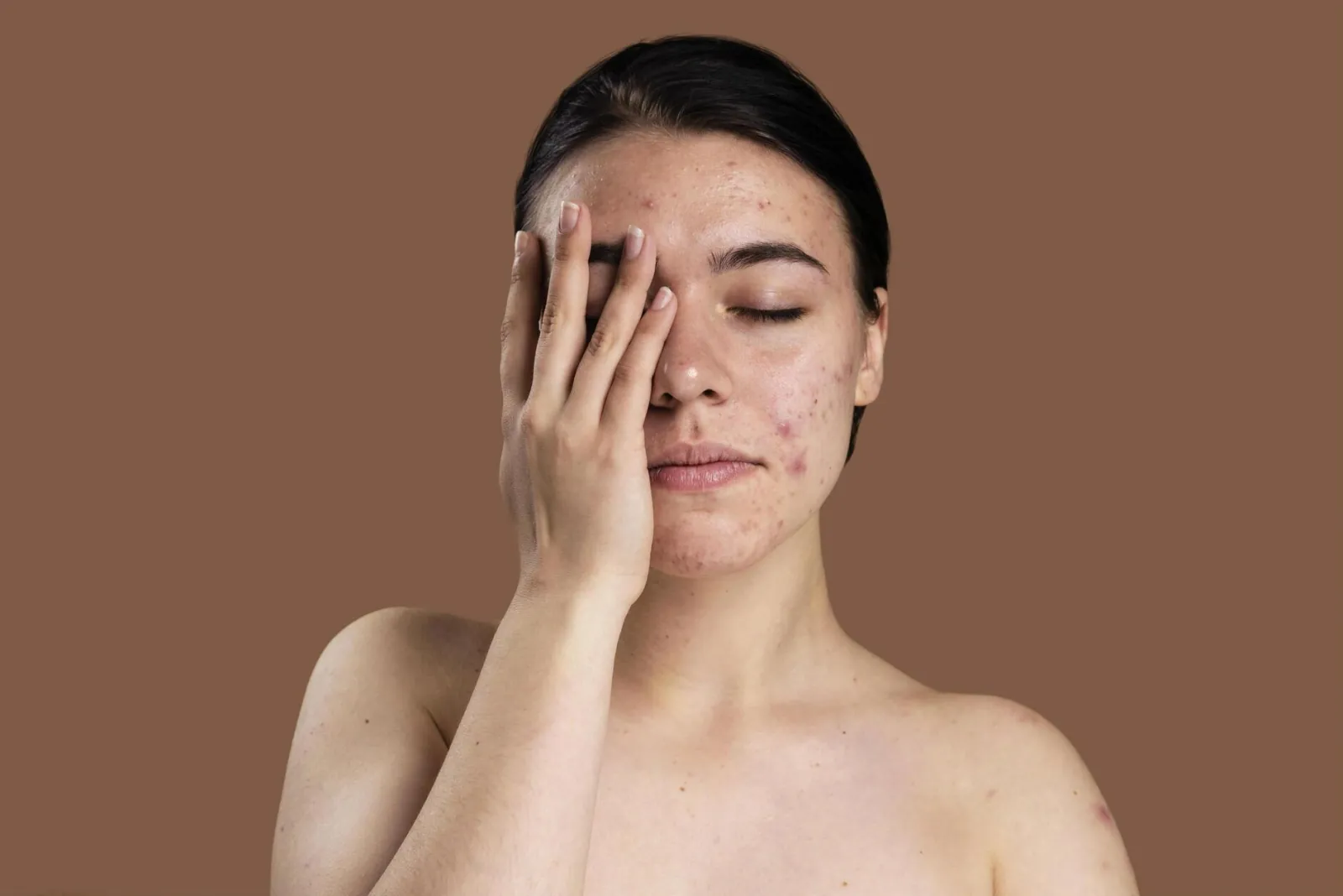
You feel them before you can clearly see them: hard bumps, sometimes painful, without the white dot that makes you think they are “about to come out”. They can stay there for days or weeks, and the urge to squeeze them grows by the day.
This is usually inflammation sitting deeper in the skin. That is why these lesions do not behave like an ordinary pimple and do not clear up with pressure. They may be acne nodules or cystic lesions, but sometimes a bump that does not go away has another cause and needs to be seen by a dermatologist.
How they form
Acne starts in the hair follicle. When sebum and dead cells build up and block it, an inflamed lesion can appear.
- Inflammation close to the surface generally produces a pustule or a red spot.
- If it is deeper, you get the hard nodule under the skin, tender or painful to the touch.
Factors that can contribute:
- excess sebum production;
- dead cells collected in the follicles;
- inflammation;
- hormonal changes;
- some cosmetics that encourage clogged pores;
- certain medicines;
- a personal tendency towards acne.
Stress is not considered a direct cause of acne, but it can make existing breakouts worse.
If you are prone to acne, a routine for acne-prone skin is chosen according to your skin type and how much it tolerates, not by adding as many actives as possible at once.
Why some never come to the surface
The reason is the depth of the inflammation. A superficial pimple forms a white dot when its contents move close to the surface. With an acne nodule, the inflammation stays in the deeper layers and can subside without ever forming a “head”.
If you try to squeeze it, you are only pressing on tissue that is already inflamed. Instead of speeding up healing, you risk:
- increasing the inflammation;
- making the lesion larger;
- encouraging a post-inflammatory pigment mark;
- raising the risk of a scar.
The deeper, redder and more painful the pimple, the more important it is to leave it alone.
Where they appear most often
The forehead and cheeks can also have nodules or deep pimples, but they are common on the chin and along the jawline. In some women, persistent breakouts on the lower half of the face, especially those that flare periodically, may also be linked to hormones.
Acne does not only appear on the face. Deep lesions can also show up on the neck, chest, shoulders or upper back.
If you have painful nodules that keep returning in the armpits, groin or other skin folds, do not automatically treat them as ordinary pimples: other skin conditions can look similar.
What to do with a deep pimple that hurts
The first step is also the hardest: do not squeeze it.
You can apply a clean, warm compress for about 10–15 minutes, without pressing hard. Day to day, keep your routine as simple as possible and give up harsh scrubs or repeated exfoliation.
Ingredients used in care, chosen according to the form of acne and your skin's tolerance, can include:
- topical retinoids;
- benzoyl peroxide;
- azelaic acid;
- salicylic acid.
That does not mean using them all at once: too many actives combined can irritate and weaken the skin barrier.
If you use retinol, also see how niacinamide pairs with retinol, so your routine does not become too harsh. Niacinamide can help skin with excess sebum or redness, and its role in skincare is not limited to acne.
How long until it goes away
There is no timeline that applies to everyone. A deep inflamed lesion often evolves more slowly than a superficial pimple and can subside within a few days or even weeks. Sometimes the pain goes first, but a small hardened area or a reddish or brownish mark remains.
The inflammation being gone does not mean the mark is gone too. If a mark remains after healing, sun protection becomes even more important: sun protection applied every day stops marks left after inflammation from darkening and shields the skin from UV radiation.
Pimple under the skin or cyst?
Not every bump under the skin is a pimple. An acne nodule is usually red, tender and appears where you already tend to break out. An epidermoid cyst, for example, often has a clearer outline and can persist for a long time without behaving like acne.
If a lump does not change, keeps growing or always appears in the same place, the safe option is a dermatology consultation.
When to see a dermatologist
A single pimple is generally not a cause for concern. Things are different when such lesions appear often, are large, hurt a lot or leave marks. Book a consultation especially if:
- you have several deep nodules at the same time;
- breakouts keep returning in the same areas;
- scars are left behind;
- the pain is severe;
- the products you use at home do not help;
- acne affects your self-confidence;
- a bump stays the same for a long time.
In nodular or cystic acne, treatment started early can reduce the risk of scarring. If you already have marks from earlier episodes, also read about options for skin scars: treating them is different from treating active acne.
Good to know
- At first, a very painful pimple is barely visible, because the inflammation sits deep.
- Squeezing an acne nodule can increase the inflammation rather than remove it.
- Acne does not appear because of “dirty” skin.
- Over-washing and aggressive exfoliation irritate the skin even more.
- The risk of scarring is higher with nodules than with superficial acne.
- If a nodule does not go away or looks unusual, do not automatically assume it is an ordinary pimple.
FAQ
I have a hard bump but no white dot. Why?
The inflammation is probably deeper and no pustule has formed at the surface, which is typical of nodular acne.
Can I prick it with a needle?
It is not advisable. You can injure the skin and cause infection, marks or scars, while the cause of the inflammation remains.
Does toothpaste help?
It is not an acne treatment. Its ingredients can irritate the skin and increase redness.
Can a pimple stay under the skin for months?
Deep acne can subside slowly, but something that lasts for months should be seen by a dermatologist to confirm that it is acne.
Are chin pimples always hormonal?
No. The chin and jaw area sometimes makes you think of hormones, but location alone does not prove the cause.
Does ice help?
Applied briefly and without staying directly on the skin for long, it can temporarily ease the pain and the feeling of inflammation; the cause of the acne remains untreated.
In closing
A deep pimple takes time to heal, and squeezing almost never speeds that up. A gentle routine, ingredients suited to your skin and SPF help you more than aggressive exfoliation or experiments at home. If nodules keep coming back, hurt or leave scars, do not put it off: a dermatologist can determine what type of lesion you have and help you choose the right treatment.